
My Marathon Story
My Half Marathon Journey: Injuries, Recovery & Running Sub-2 Hours
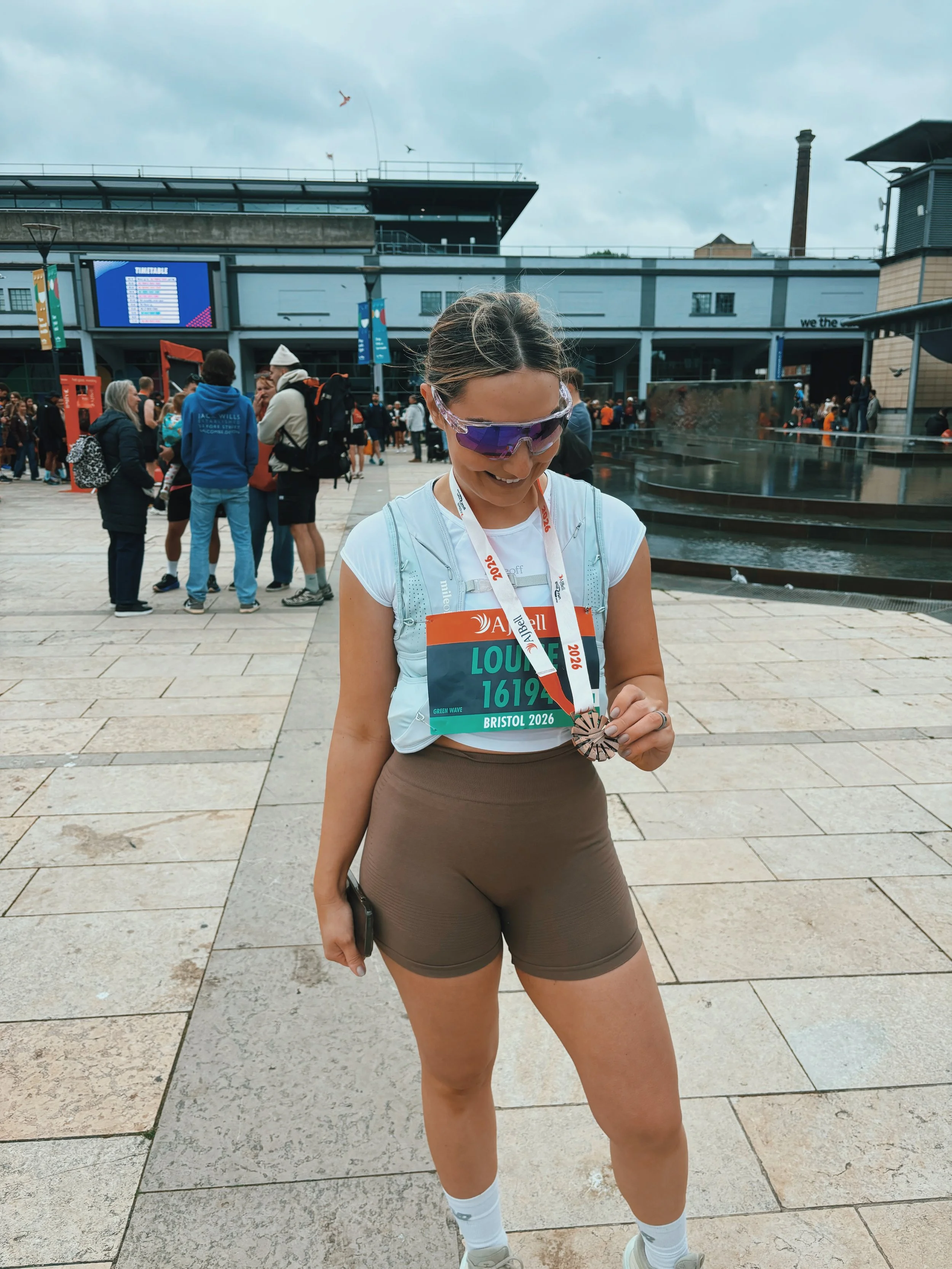
Looking back now, if I had to sum up my entire half marathon journey in three words: ambitious, rewarding and at times, unsustainable.
Allow Me To Set The Scene
In the latter quarter of 2025, I had just completed my first 10k race, got married over the summer and was in the middle of building my in-person coaching business. Naturally, instead of slowing down, I decided to take on another challenge: training for my first half marathon.
At the time I had never run more than a 10k and as much as I loved long distance running I couldn’t fathom a reason why anyone would want to run for more than an hour at a time. I set myself up with a progressive training plan working my way up to the full distance because I felt I needed reassurance that I could run the distance before completing the half marathon. Logically I felt like if I ran the full distance I could give myself a realistic goal time based on my current ability because simply completing the distance in that moment wasn’t quite enough for me.
Uh Oh! Fighting Against Injuries
To give this situation context I was already suffering from one injury; patellar tendinitis for just over 9 months at the point at which I signed up for the half marathon. My osteopath, Anna, wasn't exactly overjoyed to hear this news and was concerned that I could further aggravate my injuries especially if I increased the demand on my body by running more frequently and for longer distances. In my excitement and ambition we discussed that upon first look at my training plan, increasing the overall weekly load of my running by more than 1k a week could potentially increase the risk of a stress fracture. As a personal trainer relying on my physical ability to do my job this was not really a risk worth taking.
In preparation for the race in May I decided to start my training in early January so I had 18 weeks to build up to the full distance as well as time for a taper week before actual race week. The first seven weeks on the training block went incredibly well, I was feeling more mentally resilient and physically fitter than I have ever felt in my life. I was contending with the knee injury constantly but I was able to manage the pain and have regular sessions with Anna to monitor my progress.
It was on the final long distance run of that seventh week that changed the trajectory of my running journey.
You Can’t Enjoy The Highs Without The Lows
This run was 14k in distance, within 4k I could feel an uncomfortable pain in my left ankle every time my foot struck the ground. As stubborn as I am, I persevered because up until that point I had been so regimented with my training that I was prioritising distance over listening to my body.
Looking back, the warning signs were obvious.
My overall workload had increased significantly as I was coaching across two gym locations. My daily step count was climbing, my sleep was suffering because of earlier starts, and I wasn’t fuelling myself properly as my mileage increased.
Recovery also became an afterthought.
My warm-ups lacked consistency, stretching was rushed and I was still strength training three times per week on top of running three times weekly. I was asking more and more from my body without giving it enough back in return.
Eventually, something had to give.
Adapt & Overcome
At the time, I saw injuries as obstacles interrupting my progress.
Looking back now, they were warning signs that I needed to pay more attention to recovery, balance and sustainability.
That became even clearer after my appointment with Anna, where it was confirmed I had developed plantar fasciitis — an overuse injury causing inflammation in my foot.
It was at this point I had to adapt, take some time to rest which meant two whole weeks off running, make adjustments to my running plan as well as my strength training programme and take more conscious steps to fuel, sleep and recover effectively.
It took six weeks to get back on plan, far more time, energy and mental effort than I ever anticipated when I signed up for the race.
The Home Straight
Fast forward another three weeks. Heading into a taper after running the full distance, I was feeling confident and ecstatic about the progress I had been making. My injuries were manageable and had improved so I could see the value in taking steps to recover as seriously as getting the scheduled runs completed.
In the last 10 days before the marathon I developed cold/flu symptoms and made the decision to skip a couple of my final runs so as not to worsen any symptoms. However, I was concerned that if I didn’t keep my body moving I might lose the progress I had managed to claw back in those last few weeks. I completed one final 4k run a few days before race day, carb loaded and tried to get as much rest as possible.
Race Day Ready
On the day I felt positive, trusted the process and hoped all of the hours I had put in would pay off. I managed to run the half marathon 3 minutes faster than my goal of sub 2 hours, pain free and every minute of the last 18 weeks felt worth it.
Completing the half marathon became one of the achievements I’m most proud of – not simply because of the result, but because of everything it took to get there.
Life has an interesting way of presenting to you the lessons you need to learn. It’s how you overcome it all, that’s the important and rewarding part. I have incredible respect for the sport of running and those who dedicate their lives to it.
The Truth About Running Culture
I think it’s important to be honest about my experience because the race day highlights reel often shared on social media doesn’t always present the realistic struggle and challenges that present themselves throughout a half marathon training block. I would always encourage anyone to achieve their goals but want to emphasise that taking care of yourself needs to be the top priority.
This experience also changed the way I view modern running culture.
On one hand, I think the rise of run clubs and community-based events is incredibly positive. In a world that feels increasingly disconnected, running gives people structure, belonging and genuine human connection. There’s also something mentally freeing about running that’s difficult to replicate elsewhere.
However, I also think social media and influencer culture have normalised extreme distances and unrealistic expectations for everyday runners.
Running is often presented as endlessly accessible — and in many ways it is — but it’s also physically demanding, highly repetitive and incredibly easy to get wrong when recovery, technique and progression are neglected.
The pressure to constantly run further, faster and more frequently can quickly become unhealthy for people who aren’t full-time athletes or being professionally coached.
Final Thoughts
If this experience taught me anything, it’s that progress means very little if you sacrifice your health in the process.
Running can be incredibly rewarding, but having structure, realistic progression and proper recovery in place makes all the difference.
Whether your goal is your first 5k, a half marathon or simply becoming more confident with running, having the right support can help make the process far more sustainable and enjoyable.
If you’re looking to start your own running journey, I’d love to help support you through it! Download a free copy of my half marathon training plan here!